



- Find the best broker for your trading needs
- Compare spreads, fees, and platforms
- Read in-depth reviews and analysis

Page Navigation


Select a different country or region to view content tailored to your location.

FxScouts helps traders across the globe by meticulously testing and reviewing online brokers and providing Forex education and market analysis. Our partners compensate us through paid advertising. While partners may pay to provide offers or be featured, they cannot pay to alter our recommendations, advice, ratings, or any other content. Our content and research teams do not participate in any advertising planning nor are they permitted access to advertising campaign data. For more detailed information click this link.

Alison Heyerdahl is the Head of Content at FxScouts and a Chartered Market Technician (CMT), as well as a trader and financial writer with extensive experience in Forex trading, broker analysis, and market research. She has reviewed 100+ brokers, publishes weekly YouTube trading videos, and co-hosts the “Let’s Talk Forex” podcast.

Alison Heyerdahl is the Head of Content at FxScouts and a Chartered Market Technician (CMT), as well as a trader and financial writer with extensive experience in Forex trading, broker analysis, and market research. She has reviewed 100+ brokers, publishes weekly YouTube trading videos, and co-hosts the “Let’s Talk Forex” podcast.
Chris Cammack is the Partner Manager and a financial writer at FxScouts. Chris builds and maintains our relationships with our partners to provide our users with the best Forex trading experience.
Nigerian traders often choose a Naira (NGN)-denominated Forex trading account to avoid repeated currency conversion fees when depositing or withdrawing funds. Instead of converting Naira to US Dollars and back again, an NGN account allows traders to keep their balance in local currency, reducing costs and simplifying account funding.
Some brokers that support NGN accounts also process payments through Nigerian banking channels, which can result in faster deposits and withdrawals. Beyond the account currency, NGN trading accounts operate the same as USD or EUR accounts—you can trade the same instruments, use the same platforms, and apply the same strategies. Below are the best Forex brokers with NGN accounts for 2026, selected to suit different trading styles and budgets.
Trusted. Transparent. Tested.
For over a decade, we’ve set the standard in forex broker reviews—collecting thousands of data points yearly to deliver unbiased, expert-backed insights.
Skip the trial and error! Below, you’ll find the best forex brokers for Nigerian traders for 2026—thoroughly tested, verified, and ranked, so you can trade with confidence.

Broker | Official Site | ZAR Account | FSCA (SA) Regulated | Min. Deposit | Beginner Friendly | Cost of Trading Total trading cost at the time of last update, for 1 lot of EUR/USD using the account with the lowest minimum deposit. Includes spread and commission. | EUR/USD - Standard Spread This is the spread on EUR/USD using the account with the smallest deposit requirements. | EUR/USD - Raw Spread EURUSD spread on account with best pricing available for pro traders. | Regulated By | Compare | ||
|---|---|---|---|---|---|---|---|---|---|---|---|---|
 | Yes | Yes | USD, NGN 0 | 2000:1 | Excellent | USD 10 | 1.00 pips | 0.10 pips |       | |||
 | Yes | Yes | USD 3 | 0:1 | Standard | USD 7 | 0.70 pips | 0 pips |   | |||
 | Yes | Yes | USD 100 | 200:1 | Excellent | USD 14 | 1.40 pips | 0.40 pips |  |



Select another broker to another broker to compare features, fees, and platforms side by side.
Find Your Ideal Forex Broker
Select another broker to another broker to compare features, fees, and platforms side by side.
0.0 pips
FSA-Seychelles, FSC, DFSA, FSCA, FCA, CySEC
USD, NGN 0
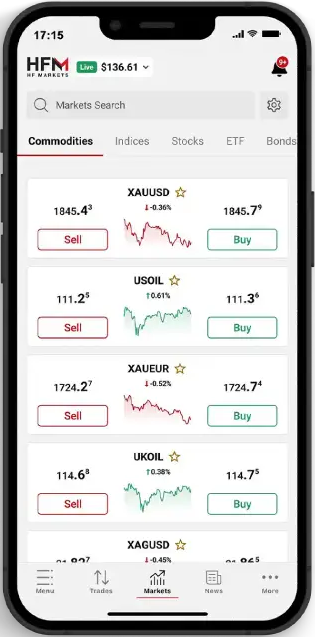
HFM Trading App, MT5, MT4
2000:1
Offers Naira-based accounts with direct deposits and withdrawals through Nigerian banks—no currency conversion needed
Ideal for new traders, allowing positions as small as 0.01 lots with just $5 minimum deposit (or NGN equivalent)
Offers Nigeria-specific trading education and workshops both online and in person
Strong regulatory backing offers trust and transparency, important for Nigerian traders wary of scams
The NGN-based accounts offer wider spreads compared to USD-based Zero or Raw accounts
Unlike Exness, HFM withdrawals are not instant, even for local banks
HFM | Best for: Nigerian beginners looking for NGN accounts with local deposit options and educational support

FxScouts
 YouTube
Select another broker to another broker to compare features, fees, and platforms side by side.
0.1 pips
CMA, FSA-Seychelles, FSC, B.V.I FSC, FSCA
USD 3
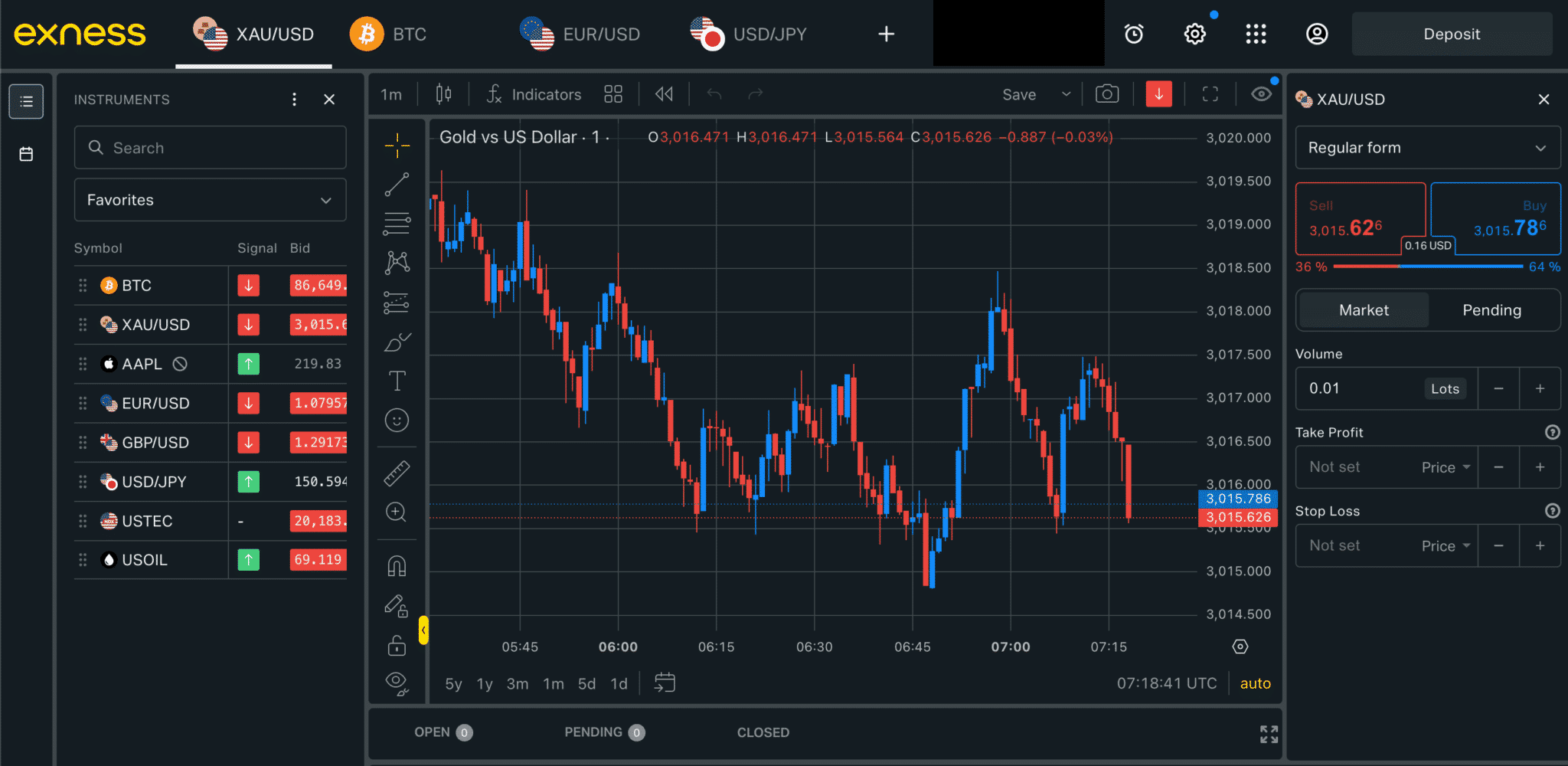
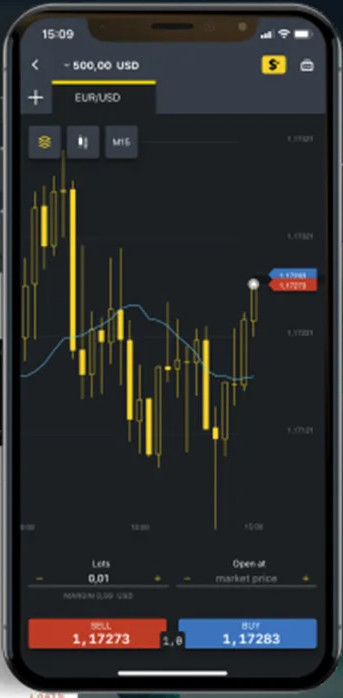
Exness Terminal, MT5, MT4
Unlimited:1
Accepts Naira and allows instant transfers via local banks 24/7
After completing minimum trading volume, users unlock ultra-high leverage—ideal for small capital accounts
Standard, Pro, Raw Spread, and Zero—each suited for specific trading strategies
Website in NG English and customer support aligned with Nigeria time zone
No bonuses to attract new traders—everything must be capital-funded
You must trade 5 standard lots and meet equity limits to access full leverage
Exness | Best for: Nigerians wanting fast NGN transactions with flexible leverage and account types
FxScouts
YouTube
Select another broker to another broker to compare features, fees, and platforms side by side.
0.4 pips
SCB, DFSA, FSCA, FCA, CySEC
USD 100
FxProEdge, cTrader, MT5, MT4
200:1
Globally trusted compliance for serious investors in Nigeria
Flexible platform offering ideal for manual, auto, and copy trading
Provides daily technical insights, trade ideas, and signals
Although NGN is not supported, users can choose USD, EUR, GBP, and more
Only international methods like cards, Skrill, and Neteller are available
Requires $100+ initial funding, unlike Exness or HFM

FxPro | Best for: Nigerians preferring UK/EU-regulated brokers with multi-asset access (FX, stocks, futures)
FxScouts
YouTube
Select another broker to another broker to compare features, fees, and platforms side by side.


There are three main reasons why Nigerian traders choose Forex accounts denominated in Naira (NGN).
If you deposit NGN into a USD trading account, your funds are converted to US Dollars—often at an unfavourable exchange rate and with additional fees. You may then be charged again when withdrawing back into Naira.
With an NGN trading account, deposits, withdrawals, and balances remain in Naira, helping you avoid repeated conversion costs.
Brokers offering NGN accounts often support local bank transfers and Nigerian payment methods, allowing for:
Brokers that offer NGN accounts often provide:
No Conversion Fees on Deposits and Withdrawals
This is the biggest advantage of an NGN account. Avoiding repeated currency conversions can significantly reduce overall trading costs, especially for frequent funders.
Faster Funding Compared to USD Account
Local bank transfers are generally quicker than international payments. In many cases, NGN deposits and withdrawals are processed within 24 hours.
Lower Funding Costs
Funding a USD account from Nigeria can result in 7–10% losses due to conversion charges and added fees. NGN accounts eliminate most of these costs.
Funds Often Held Locally
Where brokers hold NGN balances locally, traders benefit from easier access to funds and clearer legal recourse compared to offshore USD accounts.
Conversion Costs on Non-NGN Currency Pairs
The main drawback of an NGN trading account is that profits and losses are converted into Naira when trading currency pairs without NGN as the quote currency (e.g. EUR/USD, GBP/USD, USD/JPY). This can increase trading costs over time, particularly for active traders.
Wider Spreads on NGN Currency Pairs
NGN-quoted pairs such as USD/NGN are considered exotic currency pairs and are significantly less liquid than major pairs. As a result, spreads can be very wide—sometimes exceeding 80–100 pips—making them unsuitable for short-term or scalping strategies.
Exchange-Rate Volatility
The Naira has experienced significant volatility in recent years. Holding a trading balance in NGN means currency fluctuations can indirectly affect your trading capital, particularly when holding multiple open positions.
Fewer Brokers and Account Types
Forex brokers offering NGN accounts are relatively rare due to limited Naira liquidity. Traders may therefore have fewer broker choices and fewer specialised account types compared to USD-based accounts.
Choosing a broker with the best NGN account follows the same principles as choosing any Forex broker, but with a few NGN-specific considerations.
Regulation is the most important factor. Look for brokers regulated by reputable authorities such as the FCA, CySEC, ASIC, or FSCA, and ensure client funds are held in segregated accounts.
Compare:
Be aware that with an NGN account, your balance is converted when trading non-NGN pairs, which can increase costs if you hold multiple large positions.
Most brokers offer MT4, while some also provide MT5, cTrader, or proprietary platforms. Beginner-friendly platforms may lack advanced automation features, so choose based on your trading style.
Minimum deposits for NGN accounts are always denominated in Naira and vary by broker and account type. Higher minimum deposits are often linked to better trading conditions.
Check for supported local payment options and always review:
For beginner traders, the quality of educational material and market analysis should be an important deciding factor.
Brokers offering NGN accounts often provide local or region-specific support, sometimes in Yoruba, Igbo, or Hausa. This can be especially helpful for new traders.
An NGN-denominated Forex trading account is well suited to Nigerian traders who want to avoid repeated currency conversion fees and use fast, low-cost local payment methods. It can be particularly useful for beginners and traders who fund and withdraw regularly.
However, traders who focus primarily on USD-based currency pairs, or who hold multiple positions open at the same time, may find a USD account more cost-effective due to conversion costs and wider spreads on NGN pairs. For this reason, many experienced traders choose to maintain both NGN and USD accounts, using each for different trading strategies.


Here are answers to common questions traders have about NGN trading accounts.
An NGN-denominated Forex account uses the Nigerian Naira as its base currency. All deposits, withdrawals, balances, and profits are maintained in NGN, helping Nigerian traders avoid repeated currency conversion fees.
Most reputable brokers offering NGN accounts are regulated by international authorities such as the FCA, CySEC, ASIC, or FSCA. Nigerian traders should ensure their broker is properly regulated and that client funds are held in segregated accounts.
Yes. Forex trading is legal in Nigeria. However, trading profits may be subject to local tax obligations, and traders are advised to use well-regulated brokers.
In many cases, yes. Brokers offering NGN accounts often set lower minimum deposits to accommodate local traders, though requirements vary by broker and account type.
NGN accounts are uncommon because brokers need access to large Naira liquidity pools, which are difficult to source. In addition, brokers face exchange-rate risk when the Naira depreciates against the US Dollar.
While deposits and withdrawals are usually conversion-free, some brokers charge commissions in USD, even on NGN accounts. This can lead to small but repeated conversion costs, so traders should always check the commission currency.
An NGN account is suitable for traders who want to avoid conversion fees and use local payment methods. Traders who focus on USD-based currency pairs or hold multiple positions open may prefer a USD account—or choose to maintain both.
Explore more resources that fellow traders find helpful! Check out these other guides to enhance your forex trading knowledge and skills. Whether you’re searching for the best brokers, educational material, or something more specific, we’ve got you covered.

Discover the top Forex brokers in Nigeria. Compare top platforms, fees and features to make an informed trading choice.

Compare the best Forex trading platforms for 2026, including MT4, MT5, cTrader, and TradingView. Find the right tools to enhance your trading experience.
What is Forex trading and how does it work? An easy-to-read guide including how to trade, and how to choose a reliable broker.
60-90% of retail traders lose money trading Forex and CFDs. You should consider whether you understand how CFDs and leveraged trading work and if you can afford the high risk of losing your money. We may receive compensation when you click on links to products we review. Please read our advertising disclosure. By using this website, you agree to our Terms of Service.
Partner Manager and Financial Writer
Head of Content
Financial Writer




Welcome to the FxScouts community! We’re thrilled to have you on board. You’ve successfully signed up for our forex newsletter, where you’ll receive expert insights, market analysis, and the latest news straight to your inbox.
Get ready to stay ahead of the curve with our regular updates designed to help you make informed trading decisions.
Happy trading!
The FxScouts Team